It's the little things (II)
Another collection of differences (from an American perspective) we've noted between here and back home:
At the bank there are 2 ATM type machines- one gives you cash but no receipt, and the other prints out your statements with all your activity since the last time you printed one. So, if you want a receipt of your cash transaction you have to go to a second machine afterwards. Or if you want to know how much money you have before you take out cash, it's also a two-step process.  Speaking of cash, that's pretty much all people use around here. It's especially different at bars where in the USA people typically start tabs with a credit card. People just pay with cash a lot, or many stores accept Bankomat cards (you use your ATM card like a debit card). I'm sure for big purchases places accept credit cards, but the difference is the every-day expenditures are all in cash.
 People wait for the proper signal at intersections and crosswalks even if there are NO CARS COMING! Sometimes I feel guilty if I just go ahead, but what's the point in standing there when there's nothing in sight?!
 They do have sandwiches here. But, what we wonder sometimes is exactly how long have those sandwiches been sitting there? We never see anyone making them nor order one, yet there are always plenty of pre-made sandwiches sitting in the case at the shops and vendors. When you do order something that looks a lot like an American sandwich, it has no mayo and is very dry :(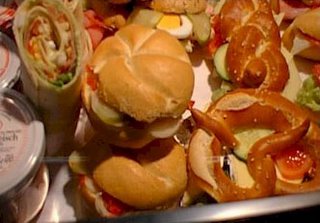

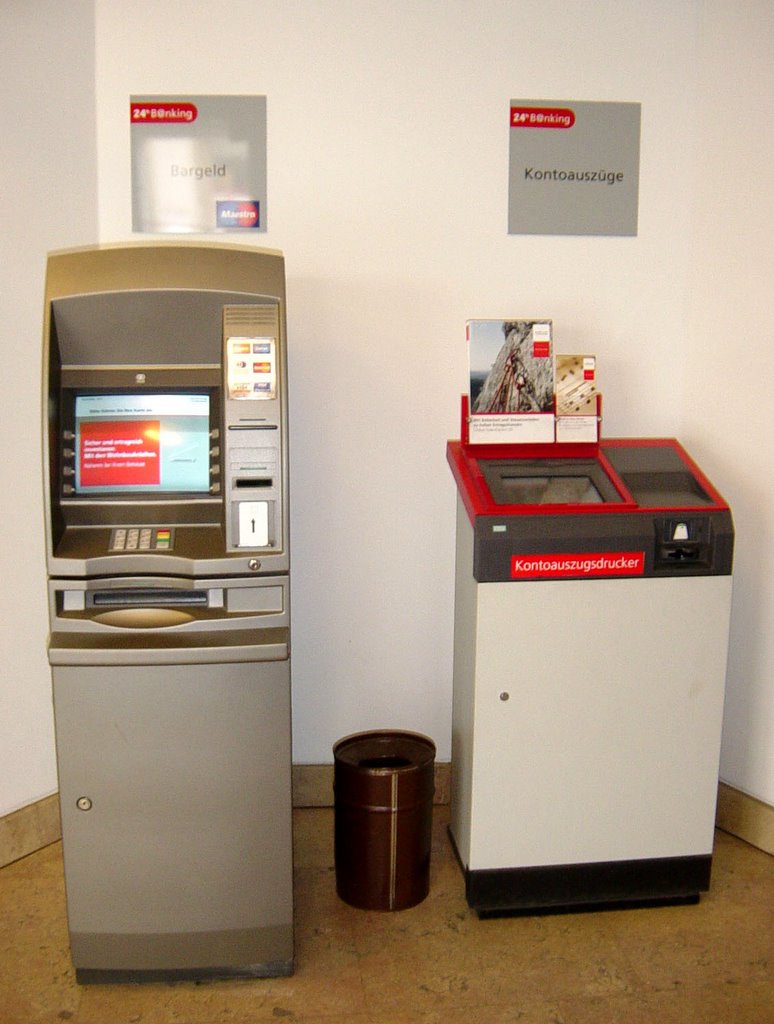 Speaking of cash, that's pretty much all people use around here. It's especially different at bars where in the USA people typically start tabs with a credit card. People just pay with cash a lot, or many stores accept Bankomat cards (you use your ATM card like a debit card). I'm sure for big purchases places accept credit cards, but the difference is the every-day expenditures are all in cash.
 People wait for the proper signal at intersections and crosswalks even if there are NO CARS COMING! Sometimes I feel guilty if I just go ahead, but what's the point in standing there when there's nothing in sight?!
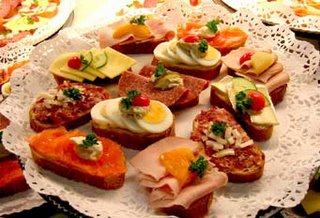
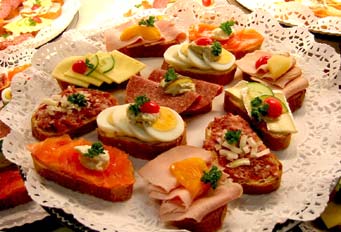
Sandwiches are a different concept than what we're used to in America. Consistent with the accuracy of the German language, each configuration has a specific name here, where in the USA we just lump everything into the category of sandwich. There is Gefuelltesbrot which can have any combination of ingredients, but they are all diced. And there are open-faced options such as Belegtes Brot and a smaller version called Brotchen. They have this thing called Kaesebrot, but I'm sorry, a roll with a piece of cheese just does not count as a sandwich! What about mayo or veggies or meat?
Here's a picture of Brotchen:
 They do have sandwiches here. But, what we wonder sometimes is exactly how long have those sandwiches been sitting there? We never see anyone making them nor order one, yet there are always plenty of pre-made sandwiches sitting in the case at the shops and vendors. When you do order something that looks a lot like an American sandwich, it has no mayo and is very dry :(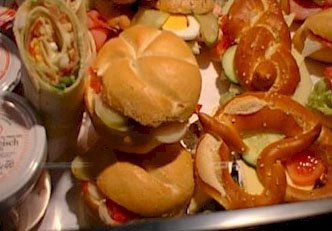
When you order a beer in a bar you just ask for a big one (ein grosses Bier, 0.5 liter) or small one (ein kleines Bier, 0.3 liter). What you get depends on which brand that particular bar has chosen to serve. To our American sensibilities, there's very little difference between all the beers. They're all yellow and of really good quality. Some places do offer Guinness or a Weissbier, but the Maerzen is ubiquitous. It's not like in the USA where you have a plethora of brands and a wide range of quality (including bad ones). The standard brands around here are: Goesser, Puntigamer, and Murauer. When you say cheers (prost), it is tradition that you look each person directly in the eyes. We have found it quite frustrating and downright rude the way people behave "in line" at stores here. Different cultures have different sensibilities about these things, but it's just baffling to our American values because we where raised to respect the idea of waiting for our turn. To an American- if you get there first, you'll be served first. Not here. You could be waiting for 10 minutes to order something at the bakery and some Austrian will push (yes, it's literally a contact sport) up ahead of you and before you know it they're continuing on with their day without a thought and you're left standing there fuming and wondering what just happened. Here are two illustrations of how "a line" works:
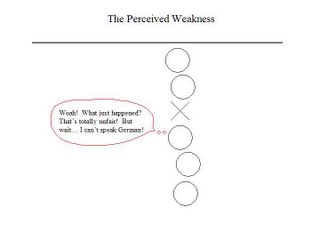
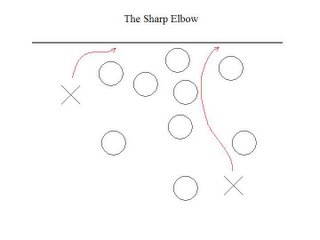
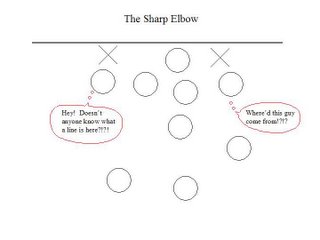
 We have found it quite frustrating and downright rude the way people behave "in line" at stores here. Different cultures have different sensibilities about these things, but it's just baffling to our American values because we where raised to respect the idea of waiting for our turn. To an American- if you get there first, you'll be served first. Not here. You could be waiting for 10 minutes to order something at the bakery and some Austrian will push (yes, it's literally a contact sport) up ahead of you and before you know it they're continuing on with their day without a thought and you're left standing there fuming and wondering what just happened. Here are two illustrations of how "a line" works:
Unless you are breathing down the neck of the person in front of you, you may not technically be waiting in line and someone will cut you: 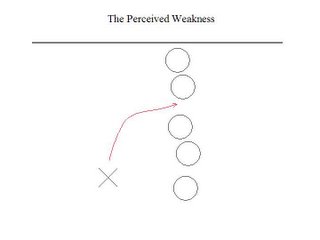
 Some places have no formal line and it's a free-for-all as to who gets served first:
 Here are two brands/packaging we found amusing: Doesn't it make you want to buy these sausages? Well, yes actually! We were so amused, we just had to buy them. David thinks they're pretty tasty too.
 Appropriate name for TP, no? And notice how the name is in English. There definitely are bits of English here and there, somehow things are more hip or desirable when they're in English.
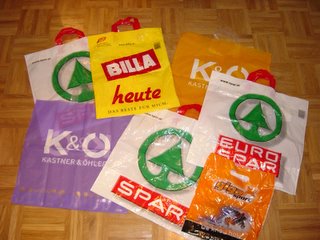
 At the grocery store you bag your own groceries and you buy the bags each time, or save them. These ones have lasted me about 5 months! I just keep one in my purse at all times just in case I end up buying something. Think of all the plastic bags that are thrown away every day in the USA, this is a great system!

 Some places have no formal line and it's a free-for-all as to who gets served first: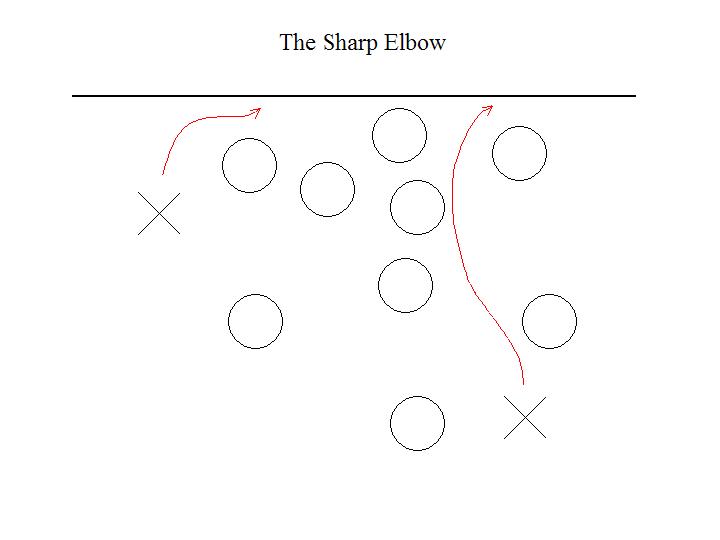
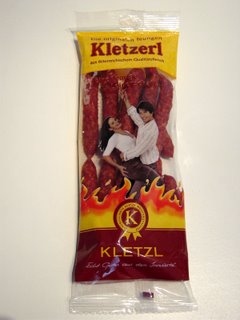
 Here are two brands/packaging we found amusing: Doesn't it make you want to buy these sausages? Well, yes actually! We were so amused, we just had to buy them. David thinks they're pretty tasty too.
 Appropriate name for TP, no? And notice how the name is in English. There definitely are bits of English here and there, somehow things are more hip or desirable when they're in English.
 At the grocery store you bag your own groceries and you buy the bags each time, or save them. These ones have lasted me about 5 months! I just keep one in my purse at all times just in case I end up buying something. Think of all the plastic bags that are thrown away every day in the USA, this is a great system!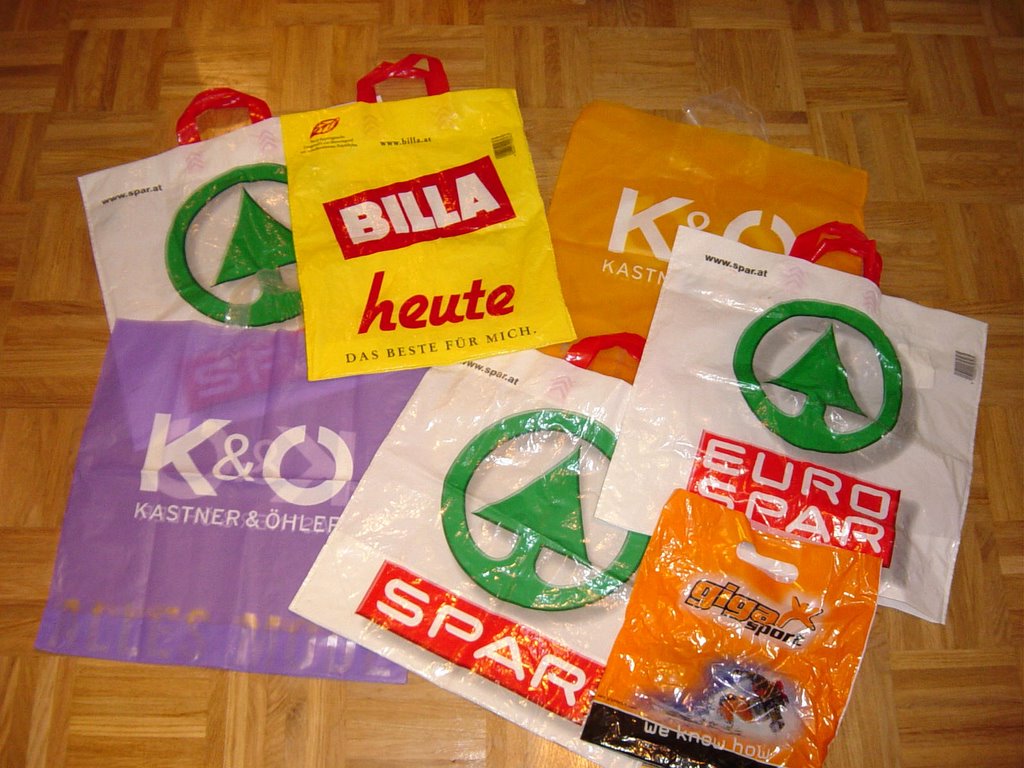
When people introduce themselves in formal situations here they simply say their last name. When we opened our bank account that's how the gentleman who helped introduced himself. But then David introduced himself first as "David Sussillo," so then I simply said "Robin." ooops!
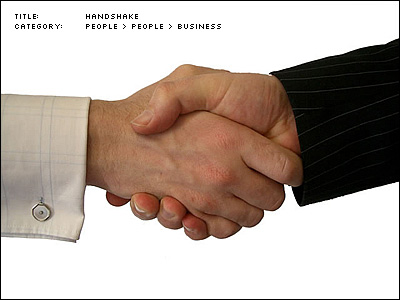
Traditionally people had titles that denoted their place in society, especially to distinguish royalty. These were very important, and not to use them was considered an insult. People use less of them now (especially the royal ones), but they are still around. For example, if a woman is married to a doctor, her title would be "Frau Doktor" even though she's not actually a doctor. And student's don't call their teachers Mr./Ms. so-and-so, they say "Frau/Herr Professor." Since everything in the German language is gender-specific, naturally the titles are too. It can get confusing however in this modern age when a woman holds a position that was traditionally held by a man.
posted by Graz is greener on the other side at 11:00 AM

.1.jpg)